Teacher in classroom with student raising hand.

NJ SEHBP Mid-Year Report Confirms Continued Financial Troubles

This past week, the New Jersey Department of Treasury released Aon’s mid-year financial report for the School Employees Health Benefit Program (SEHBP).  The report shows the SEHBP continues its troubling financial situation despite implementing large rate increases which took place January 1, 2026. It also suggests that after the large increase for 2026, the claim stabilization reserve (CSR) funding was expected to have improved to $121 million. However, the updated analysis suggests the SEHBP will now be at a $30 million negative CSR by the end of this year.

The report documents three significant factors for the SEHBP’s continued financial deterioration:

  1. Trends continue to run higher than expected with the most recent 12-month period reflecting 12% and 24% increases in medical and prescription, respectively.
  2. Enrollment decline in the SEHBP, as groups continue to leave the state and enter into direct contracts with private carriers in favor of more affordable coverage.
  3. Continued mandated migration of new members into the Educator’s Health Plan (Chapter 44) at undervalued rates that don’t support the plan benefits or claim experience.

The main drivers of cost for the SEHBP prescription plan comes from GLP-1 and anti-inflammatory drugs.  GLP-1 drugs account for four of the top five drugs in terms of drug spend, while anti-inflammatory drugs make up four of the top 10 drugs based on drug spend.

Although the report does not implicitly forecast exact rate actions for January 1, 2027, it does imply by the negative CSR forecast, continued double-digit trends and loss of membership that could signal a need for another significant high increase and/or major changes to existing plan designs.

Benecard remains actively engaged in monitoring this situation and will continue to keep you informed of any updates related to the NJ SEHBP. If you have questions or would like to discuss, please reach out to us at talktous@benecard.com.

Sources:

  1. https://www.nj.gov/treasury/pensions/documents/hb/rate-renewal/SEHBC-mid-year-analysis-presentation-PY2025.pdf
  2. https://www.nj.gov/treasury/pensions/documents/hb/rate-renewal/mid-year-analysis-local-edu-PY2025.pd
The New Jersey state flag waving along with the national flag of the United States of America. In the background there is a clear sky. New Jersey s a state in the Northeastern regions of the US

Update: Prescription Drug Plan Changes Approved for NJ SHBP-LG

(Effective July 1, 2026)

On September 24, 2025, the NJ SHBP Plan Design Committee (PDC) met and approved several changes to the prescription drug plans for the State Health Benefits Program – Local Government (SHBP-LG).  The changes were initially planned for January 1, 2026, but were delayed. 

On February 11, 2026, the PDC announced key updates to the previously approved SHBP-LG plan options, leading with the effective date which is now slated to be July 1, 2026.

Key Updates

For SHBP-LG Actives and Early Retirees, the plan design changes do not apply to the current plan options.  Instead, a new plan option was created that will be offered alongside the other available plans.  There were no changes to Medicare-eligible retirees.

Effective July 1, 2026 the new plan offering will have the following plan design:

  • ● Non-diabetic GLP-1 drugs prescribed for weight loss will have a $45 copay per 30-day supply until the State implements a lifestyle management program. Once the program is active, members who participate will continue paying the $45 copay, while those who do not participate in a lifestyle management program will see their copay rise to $125 per 30-day supply. The implementation of this program is still uncertain at this time but intended to be available for July 1, 2026.
  • ● Generic drugs: $10 retail (per 30-day supply) / $10 mail order (90-day supply)
  • ● Preferred brand drugs: $20 retail (per 30-day supply) / $50 mail order (90-day supply)
  • ● Non-preferred brand drugs: $75 retail (per 30-day supply) / $150 mail order (90-day supply)
  • ● Specialty drugs: $75 (available through mail order only, up to a 30-day supply)

In addition, mail order will become mandatory for all maintenance drugs. The resolution also sets new out-of-pocket maximums for prescription drug benefits: $2,120 for individuals and $4,240 for families. All other prescription benefits remain unchanged—such as mandatory generic, mandatory mail order for specialty drugs, step therapy, and an exclusionary formulary. 

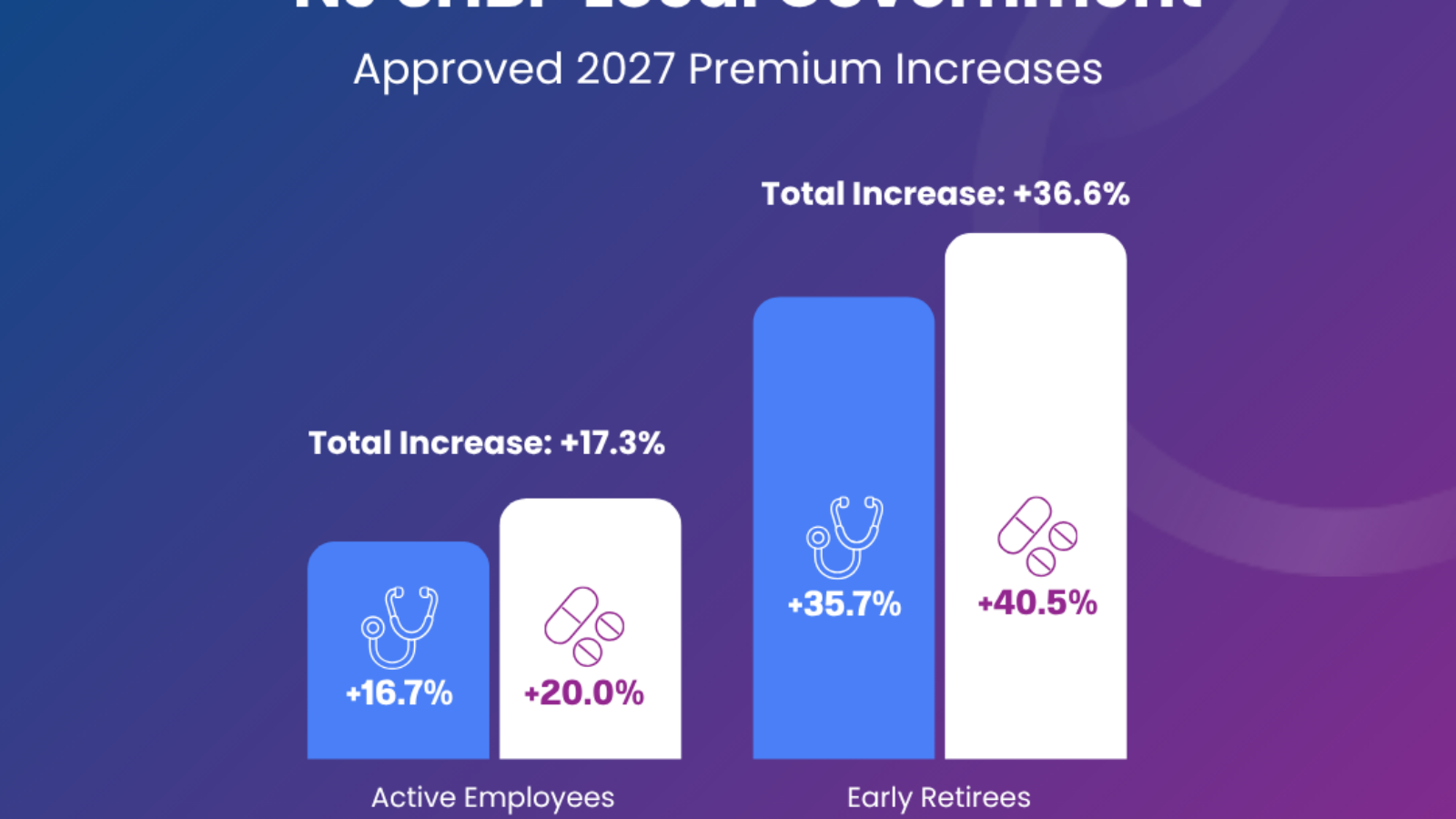
The new plan option provides for a 4.7% rate reduction off of the January 2026 renewal increase for the Rx for local government actives that enroll in the plan.  For the early retirees who enroll in this plan, the rate reduction is 2.9% off the January 2026 renewal increase.  These rates do include a 6% margin to help build the CSR balance plus an additional load to collect amounts owed under Chapter 86.

Benecard will continue to closely monitor this ongoing situation and keep you updated on any further developments or communications related to the NJ SHBP-LG. In the meantime, if you have any questions on this topic, please email us at talktous@benecard.com.

Sources:

1 “SHBP PDC Resolution #2025-11”, NJ Treasury
2 “State Health Benefits Program – July 2026 Premium Rate Update”, AON

Close up of senior man's hands opening daily pill organizer

What to Know About Oral Wegovy: Key Updates on Pricing, Dosage, and Administration

Following our recent blog article announcing the FDA approval of Novo Nordisk’s Wegovy® tablet and its introduction to the U.S. market, initial pricing from the manufacturer for the commercial market (i.e., employer sponsored plans) is consistent with the existing injectable formulation.

Recent published media articles are stating the cost for the Wegovy oral tablet, depending on the dosage, range from approximately $149–$299 per month. These prices are based solely on those without insurance, otherwise referred to as self-pay cash paying customers. These prices are significantly lower than what the manufacturer charges to the commercial market.

Dosage and Administration

How will the Release of the Oral Tablet Impact Plan Sponsors?

Despite the introduction of oral Wegovy, injectable GLP-1 therapies are expected to remain a core treatment option. Although the pricing for injectable Wegovy is not expected to change at this time, the entire GLP-1 market will evolve as competition intensifies, particularly with the anticipated launch of Eli Lilly’s oral GLP-1 candidate, orforglipron, and additional oral entrants that may influence future pricing strategies.

With the marketplace now offering an oral alternative, overall GLP-1 utilization and access is expected to increase significantly and add to further cost pressures on plan sponsors. Benecard continues to develop a comprehensive GLP-1 strategy for its plan sponsors, adapting to the evolving GLP-1 marketplace. Understanding thoughtful and innovative benefit design, ongoing clinical oversight, and careful formulary alignment will be essential to ensure appropriate access, effective utilization, and sustainable outcomes for plan sponsors.

Please contact your Benecard Client Relations Manager or Sales representative to learn about Benecard’s comprehensive GLP-1 strategy.

Sources:


Medical Science Laboratory: Portrait of Beautiful Black Scientist Looking Under Microscope Does Analysis of Test Sample. Ambitious Young Biotechnology Specialist, working with Advanced Equipment

Managing the Next Wave of GLP-1 Weight Loss Breakthroughs

The GLP-1 landscape continues to evolve rapidly. Along with the recent FDA approval of Novo Nordisk’s Wegovy® oral pill—which we addressed in a separate update last week—additional GLP-1 therapy breakthroughs are delivering promising weight loss results, expanding long-term maintenance use, and broadening the population eligible for treatment. While the clinical potential is compelling, the financial implications for plan sponsors are significant, and underscore why proactive benefit strategy remains critical for employers and health plans.

Next-Generation Weight Loss Drug Developments

Eli Lilly’s latest results for retatrutide illustrate the rapid evolution of weight loss drugs. The triple-agonist therapy, which activates 3 receptors in the body (GLP-1, GIP, and Glucagon) to more effectively manage blood sugar and weight, delivered nearly 29% average weight loss after 68 weeks in patients with obesity and knee osteoarthritis, along with meaningful pain reduction.1 In contrast, existing weight loss injection therapies—including Saxenda®, Wegovy®, and Zepbound®—have demonstrated approximately 10% to 21% total weight loss over a similar timeframe (roughly 54 to 72 weeks).

Concurrently, recent trials have indicated that Eli Lilly is positioning its oral GLP-1 candidate, orforglipron, as a maintenance therapy following initial weight loss. While Novo Nordisk has taken an early lead with FDA approval of the Wegovy® oral pill, Lilly’s oral GLP-1 has also been awarded a national priority review voucher by the FDA2, which could accelerate regulatory timelines. Together, these developments highlight how next-generation GLP-1 drugs may impact both utilization patterns and pharmacy spend, particularly for long-term maintenance treatment.

Looking further ahead, investments in companies like Prolynx points to a new wave of long-acting obesity treatments designed for monthly or quarterly dosing. These innovations would aim to improve adherence and persistence by addressing real-world limitations of today’s weekly GLP-1 regimens, further expanding utilization.3

Benecard’s Perspective

At Benecard Services, we see this moment as an opportunity for smarter benefit design.  Rather than blanket exclusions, we help clients implement clinically informed strategies that balance patient access with long-term cost sustainability. This includes defined treatment parameters, centralized management to enhance oversight, proactive planning for emerging therapies, and alignment with manufacturer programs where appropriate.

For more details regarding Benecard’s comprehensive GLP-1 strategy, please contact your Benecard Client Relations Manager, Sales representative, or visit our Rx Insights blog to view our article on strategic GLP-1 drug management.

Sources:

  1. Lilly’s three-pronged drug puts obesity field ‘on notice’ | BioPharma Dive
  2. Lilly obesity pill, headed for quick FDA review, hits mark in ‘maintenance’ trial | BioPharma Dive
  3. Prolynx banks $70M for longer-lasting obesity drugs | BioPharma Dive

Untitled design (38)

FDA Approval of Novo Nordisk’s Oral GLP-1 Marks a New Phase in Obesity Treatment

The GLP-1 landscape continues to move quickly. On December 22nd, Novo Nordisk announced FDA approval of the Wegovy® pill which will be commercialized in the U.S. as of early January 20261. While additional details are still emerging, this approval itself represents a meaningful shift in how weight loss therapies may be accessed and utilized moving forward.

What’s Different About an Oral GLP-1 Therapy

Unlike injectable GLP-1 therapies, the Wegovy® pill is taken once daily. In clinical trials, the oral formulation demonstrated meaningful and comparable weight loss to the Wegovy shot, though outcomes were generally slightly lower than injectable GLP-1s2. This difference is expected, as oral medications are partially broken down during digestion, requiring higher daily doses compared to weekly injections.

Importantly, Novo Nordisk is positioning the Wegovy® pill not just for initial weight reduction, but as a long-term maintenance therapy. This emphasis on maintenance may influence prescribing patterns, adherence expectations, and duration of therapy—all key considerations for plan sponsors.

Why This Matters for Plan Sponsors

While pricing details are still emerging, this approval validates that GLP-1 innovation is shifting from injectables to more versatile, patient-centric formats. The upcoming Wegovy® pill’s commercial launch reinforces the potential for broader utilization, longer treatment durations tied to maintenance therapy, and ongoing needs for clinical oversight and formulary alignment.

At Benecard Services, we view this approval as further confirmation that benefit strategies must evolve alongside rapid GLP-1 breakthroughs. As therapies expand in form and function—from triple-agonists to long-acting formulations and now oral agents—thoughtful benefit design and proactive planning are critical.

We are actively monitoring ongoing developments and will share deeper analysis and strategic guidance in the weeks ahead. For now, this approval serves as a timely reminder: the next phase of GLP-1 therapy is here, and preparation matters.

Sources:

  1. Press Release: Novo Nordisk A/S: Wegovy® pill approved in the US as first oral GLP-1 for weight management
  2. With FDA approval of Wegovy pill, new era of oral GLP-1 weight loss drugs begins.

Thought Leadership Wordpress Images (1)

Update: NJ Government Proposes $260 Million Rescue for SHBP-LG

Since we first reported on the topic in June of this year, the financial crisis facing the New Jersey SHBP-LG has only deepened — and NJ Governor Murphy is now proposing a dramatic rescue and reform plan that many labor leaders have already denounced.

The proposal includes a major financial bailout, changes to the benefit offerings and contract requirements, and a revamp to the committee that oversees program reform.

Let’s take a look at the proposal details so far.

$260 Million Bailout

In his final keynote address at the 2025 New Jersey League of Municipalities conference, Governor Phil Murphy laid out a $260 million plan to stabilize the SHBP-LG, with the general expectation that it will allow for a rate reduction in early 2026. The funds would be allocated as follows:

    • • $180 million towards loan forgiveness for past unpaid claims.

    • • $80 million to replenish the already depleted Claims Stabilization Reserve.

Structural Reforms to Coverage

On top of the proposed bailout, there is also a push to change how the SHBP program works and is administered. This would include:

    • • A dramatic dip in the number of health plan options offered.

    • • Limitations set on all offered prescription plans, including a 3-tiered exclusionary formulary (consistent with the NJEHP and GSHP) — plus higher copays, mandatory generic, and separate copays for specialty and weight loss meds.

    • • Likely cost shift, with more costs to employees. For example:

      • ▫ Primary care copays could triple (from $10 to $30).
      • ▫ Emergency room copays could rise (from $75 to $300).
      • ▫ Deductibles would go up sharply. Under the PPO: $2,500 in-network, $5,000 out-of-network.

    • • Proposed “stay-in” and “stay-out” requirements: local governments would be required to stay enrolled for at least five years, and if they choose to leave, will be locked out for five years.

New Oversight Structure

To prevent the governance issues that have bogged down reform efforts in the past, Murphy’s proposal would create a seven-member commission, with representation from municipal employers and employees replacing the old 12-member panel.

Public Reactions

While this proposal has only just become public knowledge following the League of Municipalities Conference, it is already being met with resistance. Union leaders are amongst the most outspoken critics. The CWA (Communications Workers of America) has called the proposal a “non-starter,” arguing it shifts too much cost to workers and weakens benefits. Meanwhile AFSCME (American Federation of State, County, and Municipal Employees) has also blasted the plan, with its executive director calling it “an insurance executive dream.” And one labor leader framed the state’s approach as failing to address root cost drivers, like hospital pricing and drug costs.

As the conditions of the bailout progress and the question of whether the SHBP will still exist in 2026 looms, Benecard will stay connected to all developments and continue to keep our readers updated. If you have questions, please email us at talktous@benecard.com.


Sources:

SHBP-Local Government’s Financial Crisis – Benecard
State Health Benefits Program broke: Murphy proposes $260M bailout – nj.com
https://www.nj.gov/governor/news/news/562025/approved/20251120b.shtml
https://newjerseymonitor.com/2025/11/20/governor-murphy-state-health-benefits/
https://www.lawyer-monthly.com/2025/11/n-j-s-public-worker-health-plan-is-broke-and-murphys-260m-bailout-could-trigger-the-biggest-benefits-fight-in-a-decade/
https://patch.com/new-jersey/across-nj/njs-state-health-benefits-plan-death-spiral-murphy-proposes-260m-fix
https://nj.gov/governor/SHBPProposedLegislation.pdf
https://njbmagazine.com/njb-news-now/murphy-announces-plans-to-reform-public-worker-health-plan-system/

Untitled design (5)

Update: Trump Administration Moves Forward with Tariffs on Imported Drugs

On September 25, 2025, President Trump announced plans to impose a 100 percent tariff, effective October 1, on branded or patented pharmaceutical products imported into the United States unless manufacturers are already “building” a domestic facility.¹ While the announcement captured widespread attention, recent reporting suggests that enforcement could be delayed, selectively applied, or even paused altogether as the administration finalizes exemption criteria and navigates political and legal challenges.²

What It Means for Plan Sponsors

At this stage, the proposed tariffs have no direct impact on pricing or supply. Potential effects will depend heavily on how exemptions are defined and implemented. Drug costs could rise modestly if manufacturers pass through tariff-related expenses or if domestic production proves more expensive than overseas manufacturing. Supply chain risks remain a consideration for therapies with limited domestic capacity, though wholesalers report stable inventories and no immediate disruptions.

Outlook & Next Steps

Many implementation details are still being developed, including whether tariffs will apply to finished products or active ingredients and which product classes may ultimately be affected. Stakeholders across the pharmaceutical industry are lobbying heavily, and political, legal, or logistical challenges could shape how the tariffs are ultimately applied.3 Industry experts expect additional guidance in the coming weeks as agencies refine rulemaking and consider exemptions for essential medicines.

For now, no immediate action is required from plan sponsors and brokers. Given ample inventories, high generic utilization, and the likelihood of broad exemptions on many brand name drugs, the near-term risk to pricing increases related solely to tariffs appears highly unlikely. We will continue to monitor developments closely and update our brokers and clients as the policy landscape evolves.

Sources:

1https://www.cnbc.com/2025/09/26/us-to-impose-100percent-tariff-on-branded-patented-drugs-unless-firms-build-plants-locally-trump-says.html

2https://www.pharmacypracticenews.com/Policy/Article/10-25/Trump-Truth-Social-Tariff-Announcement/78429

3Trump drug tariff draws backlash from NJ pharma industry – NJBIZ

Untitled design (1)

NJ SHBP Plan Design Committee Approves Prescription Copay Changes for Local Government Plans

Please note that this article was originally published on 10/01/2025 and updated on 10/03/2025 after the Benecard Team received further guidance from the State.

On September 24, 2025, the NJ SHBP Plan Design Committee (PDC) met and approved several changes to the prescription drug plans for the State Health Benefits Program – Local Government (SHBP-LG).

Key Updates

The following changes apply to all State and SHBP-LG prescription plans, including MMRx and with the exception of the HD High Plan which was not referenced in the resolution. It is also important to note that these changes only apply to active employees. There were no changes to the early retirees or Medicare-eligible retirees.

Effective November 1, 2025, non-diabetic GLP-1 drugs prescribed for weight loss will carry a $45 copay per 30-day supply until the State implements a lifestyle management program. Once the program is active, members who participate will continue paying the $45 copay, while those who do not participate in a lifestyle management program will see their copay rise to $125 per 30-day supply.

The SHBP-LG will introduce the following copay structure which is now expected to become effective on July 1st, 2026:

Generic drugs: $10 retail (per 30-day supply) / $10 mail order (90-day supply)
Preferred brand drugs: $20 retail (per 30-day supply) / $50 mail order (90-day supply)
Non-preferred brand drugs: $75 retail (per 30-day supply) / $150 mail order (90-day supply)
Specialty drugs: $75 (available through mail order only, up to a 30-day supply)

In addition, mail order will become mandatory for all maintenance drugs. The resolution also sets new out-of-pocket maximums for prescription drug benefits: $2,120 for individuals and $4,240 for families. All other prescription benefits remain unchanged—such as mandatory generic, mandatory mail order for specialty drugs, step therapy, and an exclusionary formulary. 

As of now, the above plan changes do not come with any rate reduction off the double-digit premium increases for 2026 which were approved in early September.

This remains a fluid situation. Benecard will continue to closely monitor this ongoing situation and keep you updated on any further developments or communications related to the NJ SHBP-LG. In the meantime, if you have any questions on this topic, please email us at talktous@benecard.com.


Sources:

SHBP PDC RESOLUTION #2025-11

Untitled design

Protecting Plan Sponsors from Excessive Cost Risks

Prescription drug costs are one of the fastest-growing¹ and most unpredictable components of employer-sponsored health plans. A single high-cost therapy or catastrophic claimant can skew an entire year’s budget, disrupt cash flow, and destabilize long-term benefit strategies. Just 1% of employees account for nearly a third of all health care spending, averaging more than $206,000 per person annually1.

The Challenge with Self-Funding

Self-funding is often viewed as a cost-saving strategy because PBMs “promise” savings through manufacturer rebates, drug discounts, and clinical management programs. On the surface, these look attractive, but the actual savings or expected claim costs these PBM’s propose are not guarantees.

Let’s get right to rebates which typically become the primary selling point under self-funding.  Unlike our fixed rate program, where rebates are accounted for in month one and floated by Benecard, self-funded PBM’s typically don’t pay such rebates until 120–150 days after the close of each contractual year’s quarter—resulting in cash-flow challenges and budget uncertainty.

Prescription drug costs are especially vulnerable to excessive spikes in claims costs—often driven by one or two specialty drugs such as those related to oncology2 or inflammatory conditions, as well as weight-loss and diabetes drugs like GLP-1s. Stop-loss coverage may appear to offer protection, but it is not a silver bullet for managing 100% of the pharmacy risk. Plan sponsors remain exposed to exclusions through “laser” provisions, gaps in coverage, and additional costs beyond the stop loss insurance. Furthermore, after a poor claims year, it can become difficult to find a stop-loss underwriter willing to take on the risk.

The Benecard Guarantee: Combining the Best of Insured and Self-Funding

Benecard’s fixed-rate Rx benefit program is designed to break this cycle. Unlike self-funding, our model eliminates volatility by guaranteeing plan sponsors’ Rx bottom line and providing them with a fixed monthly rate for prescription drug coverage. That means:

  • ● No surprises: Plan sponsors know exactly what their Rx benefit costs will be, regardless of claimant mix or catastrophic prescriptions. There is no year-end reconciliation or unexpected supplemental payments required.
  • ● Budget certainty: CFOs and HR leaders can plan with confidence, free from the uncertainty of fluctuating claims experience.
  • ● Risk removal: The risk of one or two high-cost claimants derailing the plan is transferred away from the plan sponsors, creating true protection. There are no laser provisions or mandatory benefits that a plan sponsor is required to adopt.
  • ● Return of Savings: When plan performance is better than projected, plan sponsors receive a credit toward their renewal program costs—ensuring they benefit from favorable claims experience.

Leveraging Collectives to Spread Risk

Another strength of Benecard’s approach is the administration of collectives (groups of employers who share the risk together). By combining purchasing power and spreading risk across a broader population, collectives create stability that individual employers, particularly smaller ones, cannot achieve on their own.

Collectives help reduce the impact of catastrophic claims and ensure that no single employer bears disproportionate financial burden. For brokers advising clients, collectives are a powerful option to recommend, particularly for small to mid-sized employers who want the advantages of self-funding without the inherent risks.

A Smarter Path Forward

For plan sponsors, the choice is not just about funding models; it’s about risk management, predictability, and long-term sustainability. As brokers and consultants look for innovative ways to support their clients, and as plan sponsors seek to balance rising costs with competitive benefit offerings, fixed-rate Rx and collective solutions deliver precisely what today’s plan sponsors need: stability, protection, and guarantees.

To learn how Benecard’s fixed-rate Rx solutions can safeguard your Rx benefit plans, we invite you to connect with us and explore a smarter path forward. Email us at talktous@benecard.com to get started.

Sources:

1 “Just 1% of employees drive nearly a third of all health care spending”, BenefitsPro
2 “86% of employers increased cancer care spend since last year”, BenefitsPro